Friday, 1 May 2015

The Reasons We Cheat - And Why It Doesn't Need To Mean The End Of A Relationship....

People tend to have very firm rules about monogamy in a relationship and, generally, are fairly non-negotiable in their reactions to infidelity.
 
It's crap when someone cheats on you. You're likely to be hurt, angry, and of course, take the betrayal personally. But there is more than one reason for infidelity and cheating doesn't always need to mean that a relationship is over.
 
Who's to even say that monogamy is natural? Couldn't the idea of a person vowing to have sex with one person for a lifetime, be seen as less natural than a person having a number of different sexual partners throughout their life, as their tastes, interests and maturity changes?
 
A persons reason to cheat is individual and not always as cut and dry as many people would think. Of course women cheat too, but when considering men and infidelity, the truth is that often when men are offered sex, they take it - according to research, the reason being that men are less likely to be propositioned and so more likely to take advantage of an opportunity when it arises. Nothing boosts a man's ego like a person who isn't their wife suggesting a quickie in the stationary cupboard, and despite being possibly, the most hopeless of reasons to cheat, is often the root of the infidelity.
 
Just because a man gets married, it doesn't mean that he loses all want to be desired. So even if the stationary cupboard isn't on the cards, the thrill of a chase doesn't, necessarily, disappear the minute he walks down the aisle. And sometimes, it can be the familiarity and monotony of a relationship that drives a man to cheat, in itself stirring the fear of 'is this all there is' and the temptation of one last adventure. 
 
It hurts people, it's selfish and potentially devastating for everyone involved - however, it doesn't matter how you wrap it up, what makes an affair so tempting is the excitement and thrill that comes with it.
 
There will never be the same level of 'naughtiness' from an honest relationship for the simple reason that it's not a secret. And, for a lot of men, an affair is less about the person or even the sex, it's about the thrill - of the chase, of the secrecy and yes, even the deceit. This being the case, it has absolutely nothing to do you and everything to do with a compulsion that needs to be satisfied. 
 
I'm in no way blaming the 'victim' for the infidelity but sometimes, when in a relationship, it's easy to get comfortable and stop making an effort. Sex, appearance, communication - all the things that we invest so much time in at the beginning of a relationship but drop by the wayside the more 'comfortable' we become.
 
Relationships need effort, whether you've been together for three months or three decades and domesticity isn't always the golden chalice of happiness. Similarly, raising children, paying mortgages, arguing about sunday lunches at the in-laws, isn't alway the sexiest of things to have on your mind when trying to keep things alight in the bedroom.
 
Yes, keeping the romantic side of a relationship in this situation alive is the better thing to do but it isn't always the easiest - and is, arguably, one of the main reasons men cheat. 
 
Infidelity is often a symptom of something much bigger, a problem within the relationship that has manifested itself in one person feeling that they are unable to communicate. It's amazing to think that a couple who have lived under the same roof for 10 years feel unable to voice a concern about their relationship. But sometimes, burying your head in the proverbial sand (or something more fun) is easier than a face-to-face conversation about your emotions. 
 
Having an affair can be either a way of escaping the problems or a way of finding comfort and reassurance from someone who will prioritise you - make them feel either valid and needed again or give them space to breath, away from the tension and animosity. 
 
No, not always - all situations are unique and one persons reason for cheating will always be different from another. But an affair doesn't have to mean the end of a relationship and in some cases can act as the trigger to turn things around.
 
Thinking beyond the sex, learning to forgive the betrayal and trying to understand the reasons behind a person cheating can lead to a level of communication and understanding you might never had had before - yes it's a hard way to get there but if you think it's something worth saving, don't let people tell you it's black and white - grey is a colour too.

Saturday, 25 April 2015

Pando; The Trembling Giant - The 80,000-Year-Old Aspen Grove That Clones Itself....

The oldest living organism in the world is 80,000 years old, and clones itself. Known as Pando, and nicknamed The Trembling Giant, this organism is a single grove of Quaking Aspen trees in Utah.

The grove is called Pando, which is Latin for "I spread" - and spread it does. The grove is actually a single clonal colony of a male Quaking Aspen. Simply put, it is essentially one massive root system that began life an estimated 80,000 years ago. The root system currently has somewhere around 47,000 stems that create the grove of trees that keep the root system going.

Pando is not only considered the oldest living organism but also possibly the heaviest. The colony has spread over about 106 acres and experts think in all it weighs about 6,600 short tons. However, some experts think that chunks of the root system have died off leaving parts of the colony separated, making it effectively more than one organism. And other less-studied clonal colonies of aspen may be contenders for the title of heaviest.

Pando exists in part because frequent fires have kept conifers out of the area, and because a shift to a semi-arid climate has kept other aspen seedlings from taking root. This has left plenty of space for the ancient root system of Pando to spread and thrive. The fact that Pando is one giant organism wasn't discovered until the 1970s, by Burton V. Barnes of the University of Michigan. Currently, experts are worried that a range of factors are threatening the life of this ancient organism.

While Pando's estimated age of 80,000 years may be staggering, even more amazing is the possibility that experts have underestimated its age. Because the age of the organism cannot be determined through tree rings (the average age of the stems being around 130 years), many factors such as the history and climate of the local environment over millennia. Taking different factors into account, some experts think that Pando could be closer to 1 million years old! There is a lot of debate and speculation around Pando, but one thing is certain: this organism is mind-blowing.

10 Of The World’s Most Remarkable Trees....

From the oldest to the tallest, to the most sacred and more, as a celebration of Arbor Day I present a brief who's-who of arboreal heroes.

There are so many reasons we should thank the trees that we share this planet with. They are the gentle giants who seem to have gotten the short end of the stick, so to speak. They are generally afforded with few rights and a general lack of deep respect by many, yet meanwhile, we are so incredibly reliant on their existence: they pump out the oxygen we need to live and they absorb carbon dioxide; they remove pollution; they provide shade; they create food, control erosion, and the list goes on. So with that in mind, here's a list of a handful of remarkable trees we have in our midst.

Methuselah

 
Considered the world’s oldest tree, the ancient bristlecone pine named Methuselah lives at 10,000 feet above sea level in the Inyo National Forest, California. Hidden amongst its family in the Ancient Bristlecone Pine Forest of the White Mountains, Methuselah is somewhere around 5,000 years old. For its protection, the location is kept a secret by the forest service – which means that nobody is exactly sure what Methuselah looks like, but the ancient bristlecone pine pictured above could be it. Then again, maybe not. It's a mysterious Methuselah.

Jomon Sugi


With a height of 83 feet and a 53-foot girth, Jomon Sugi is the largest conifer in Japan. This Cryptomeria japonica grows in a foggy, old-growth forest at an elevation of 4,200 feet on the north face of the tallest mountain on Yakushima island. Estimates age the trees to be between 2,170 and 7,200 years old, based on sample analysis and size. Visitors can hike to see Jomon, but the trek takes four to five hours each way; which doesn't seem to keep people away from making pilgrimage to this old moody beauty.

Hyperion


The tallest living tree is a towering 379.1-foot coast redwood (Sequoia sempervirens) discovered by Chris Atkins and Michael Taylor in California's Redwood National Park in 2006. Hyperion is a trooper; it survives on a hillside, rather than the more-typical alluvial flat, with 96 percent of the surrounding area having been logged of its original coast redwood growth. The tree-discovering duo had earlier found two other coast redwoods in the same park – Helios (376.3 feet) and Icarus (371.2 feet) – which both also beat the previous record held by Stratosphere Giant.

The Tree of A Hundred Horses


Located on the eastern slope of Mount Etna in Sicily, the Hundred Horse Chestnut (Castagno dei Cento Cavalli) is not only the largest, but also the oldest, known chestnut tree in the world. The Sweet Chestnut is thought to be anywhere from 2,000 to 4,000 years old, with the further end of the range coming in from botanist Bruno Peyronel. This giant beauty holds the Guinness World Record for "Greatest Tree Girth Ever," with a circumference of 190 feet when it was measured in 1780, but since it has separated into three parts, it no longer holds the record as current. The tree got its name from a legend in which a queen of Aragon and her company of one hundred knights took refuge under its protective boughs during a thunderstorm.

El Arbol del Tule


While the Tree of the Hundred Horses holds the record for the tree with the greatest girth historically, the tree which holds the current record is known as El Arbol del Tule, which lives inside a gated churchyard in the town of Santa Maria del Tule in Oaxaca, Mexico. This Montezuma cypress (Taxodium mucronatum) measures around the circumference at 119 feet, with a height of only 37 feet, what a squat cutie! To get a sense of the girth, it would take 10 mid-size cars placed end-to-end to circle del Tule.

Endicott Pear


In 1630, an English Puritan named John Endicott – serving as the premier governor of the Massachusetts Bay Colony – planted one of the first cultivated fruit trees in America. Upon planting the pear sapling imported from across the pond, Endicott proclaimed, "I hope the tree will love the soil of the old world and no doubt when we have gone the tree will still be alive." Indeed, 385 years later, the tree lays claim to the title of oldest living cultivated fruit tree in North America ... and still offers its pears to passers-by.

General Sherman


How do you say majestic? How about "the General Sherman Tree." This hulking grand dame in California's Sequoia National Park is the largest, by volume, known living single stem tree in the world. This giant sequoia (Sequoiadendron giganteum) is neither the tallest known living tree, nor is it the widest or oldest – but with its height of 275 feet, diameter of 25 feet and estimated bole volume of 52,513 cubic feet, it's the most voluminous. And with a respectable age of 2,300–2,700 years, it is one of the longest-lived of all trees on the planet to boot.

Jaya Sri Maha Bodhi


While it could be argued that all trees should be considered sacred, Jaya Sri Maha Bodhi truly is. This sacred fig tree in Anuradhapura, Sri Lanka is said to be the southern branch of the historical Bodhi tree in India under which Lord Buddha attained Enlightenment. It was planted in 288 BC, and is thus the oldest living tree planted by humans in the world. It is considered one of the most sacred relics of the Buddhists in Sri Lanka and is adored and visited by Buddhists all over the world.

Old Tjikko


At a mere 16 feet in stature, this Norway spruce on FulufjÀllet Mountains in Sweden may not seem that impressive on first glimpse, but don't judge a book by its cover. Old Tjikko is 9,550 years. It is not the oldest tree on the planet per se, but it is the oldest single-stemmed clonal tree – meaning that while the trunk may have died off here and there, the same roots have endured for all this time. For millennia the brutal tundra climate kept Old Tjikko and its neighbors in shrub form, but as the weather was warmed, the bush has sprouted into a full-blown tree.

Pando


Pando (Latin for "I spread") is not a single tree, but rather a clonal colony of Quaking Aspen; and with an age of 80,000 years, it is oldest living organism in the world. Residing in Utah and nicknamed the "trembling giant," this 105-acre colony is made of genetically identical trees connected by a single root system. Remarkably, by some estimates, the woodland could be as old as 1 million years, predating the earliest Homo sapiens by 800,000 years. Pando holds another impressive record as well: at 6,615 tons, it is also the heaviest living organism on earth.


Ecosystem Services Lost To Oil and Gas in North America....

Advanced technologies in oil and gas extraction coupled with energy demand have encouraged an average of 50,000 new wells per year throughout central North America since 2000. Although similar to past trends (see the graph, this page), the space and infrastructure required for horizontal drilling and high-volume hydraulic fracturing are transforming millions of hectares of the Great Plains into industrialized landscapes, with drilling projected to continue. Although this development brings economic benefits and expectations of energy security, policy and regulation give little attention to trade-offs in the form of lost or degraded ecosystem services. It is the scale of this transformation that is important, as accumulating land degradation can result in continental impacts that are undetectable when focusing on any single region. With the impact of this transformation on natural systems and ecosystem services yet to be quantified at broad extents, decisions are being made with few data at hand.
                 
Here is a first empirical analysis to advance beyond common rhetoric and speculation of oil and gas development, combining high-resolution satellite data of vegetation dynamics with industry data and publicly available data of historical and present-day oil and gas well locations for central North America. In addition to this broad-scale assessment of satellite-derived net primary production (NPP), a fundamental measure of a region's ability to provide ecosystem services, it also evaluates patterns of land-use change and water use. Before this work, little has been done in examining these types of data and their relations with ecosystem services at broad scales.
                 
Ecosystem service trade-offs: NPP is the amount of carbon fixed by plants and accumulated as biomass. It is a fundamental and supporting ecosystem service that is the basis for all life on Earth.

As such, the dynamics of NPP affect regional ability to provide a host of other essential ecosystem services (e.g., food production, biodiversity, wildlife habitat), which makes it a robust metric for broad evaluation of ecosystem services. Oil and gas activity reduces NPP through direct removal of vegetation to construct oil pads, roads, and so on.
 
These satellite-derived measurements of NPP began in 2000 and are produced annually; they capture interannual dynamics. To match the spatial scale of NPP measurement (∼1 km2), we determined annual density of oil and gas activity at the same resolution and estimated annual loss of NPP relative to such densities. Direct loss of vegetation resulting from oil and gas activity was validated at medium and fine spatial scales (∼250 m2 and 30 m2, respectively) by examining vegetation and disturbance trends before and after drilling [see supplementary materials (SM)]. We categorized annual reductions in NPP relative to land cover type (e.g., cropland and rangeland). As NPP is measured in grams of carbon per year, we convert to equivalent biomass-based measurements to provide context and discussion.
 
The number of oil and gas wells drilled within central provinces of Canada and central U.S. states 1900–2012. Canadian provinces: Alberta, Manitoba, and Saskatchewan. U.S. states: Colorado, Kansas, Montana, Nebraska, New Mexico, North Dakota, Oklahoma, South Dakota, Texas, Utah, and Wyoming.
 
We estimate that vegetation removal by oil and gas development from 2000 to 2012 reduced NPP by ∼4.5 Tg of carbon or 10 Tg of dry biomass across central North America (see the chart on page 402, left). The total amount lost in rangelands is the equivalent of approximately five million animal unit months (AUM; the amount of forage required for one animal for 1 month), which is more than half of annual available grazing on public lands managed by the U.S. Bureau of Land Management (BLM). The amount of biomass lost in croplands is the equivalent of 120.2 million bushels of wheat, ∼6% of the wheat produced in 2013 within the region and 13% of the wheat exported by the United States (see SM for equivalency calculations).

The loss of NPP is likely long-lasting and potentially permanent, as recovery or reclamation of previously drilled land has not kept pace with accelerated drilling (SM). This is not surprising because current reclamation practices vary by land ownership and governing body, target only limited portions of the energy landscape, require substantial funding and implementation commitments, and are often not initiated until the end of life of a well. Barring changes from existing trends and practices, it is likely that NPP loss and its effects (i.e., further loss of forage) will continue to parallel drilling trends and, potentially, may create unforeseen conflicts among agriculture, conservation, and energy.

Additional ecosystem functions, including wildlife habitat and landscape connectivity, are arguably as important as NPP. We estimate that the land area occupied by well pads, roads, and storage facilities built from 2000 to 2012 is ∼3 million ha, the equivalent land area of three Yellowstone National Parks (see the chart, middle). Although small in comparison with the total land area of the continent, this important land use is not accounted for and creates additional pressures for conserving rangelands and their ecosystem functions. The distribution of this land area has negative impacts: increasing fragmentation that can sever migratory pathways, alter wildlife behavior and mortality, and increase susceptibility to ecologically disruptive invasive species. As competition for arable land intensifies because of food and bioenergy demand, oil and gas may further expand into native rangelands.
 
The hydraulic fracturing technology underlying the current expansion of oil and gas drilling in the region has profound implications for hydrological, water-quality, and water-use regimes. High-volume hydraulic fracturing uses 8000 to 50,000 m3 of water per well for the initial fracturing event, which results in 7187 to 33,903 million m3 for wells drilled across this region during 2000 to 2012 (see SM). Nearly half of wells drilled in this time period occurred in already highly or extremely water-stressed regions (see the chart, right). As refracturing becomes more common to yield greater production, oil and gas development adds to an already fraught competition among agriculture, aquatic ecosystems, and municipalities for water resources, in addition to concerns of water quality.
                  
Avoiding broad-scale loss: The capacity for insight into land-use decisions has improved substantially since the last major episode of widespread land-use change across the Great Plains. In the early 20th century, rapid agricultural expansion and widespread displacement of native vegetation reduced the resilience of the region to drought, ultimately contributing to the Dust Bowl of the 1930s. It took catastrophic disruption of livelihoods and economies to trigger policy reforms that addressed environmental and social risks of land-use change.
                 
Fortunately, data and information are now far less of a barrier in understanding and addressing continental and cumulative impacts. However, the scale and focus of most land-use decision-making discourages comprehensive assessment of trade-offs implied in oil and gas development.

Recent planning efforts by U.S. federal management agencies demonstrate potential to balance demand for energy development with the need to protect other values, but the scope is limited to lands under federal jurisdiction. About 90% of oil and gas infrastructure in this region occurs on private land (United States only; see SM). Provinces, states, and municipalities that permit the majority of oil and gas development lack the capacity and mandate to address continental or regional consequences that transcend political boundaries; this lack leads to fragmented and piecemeal policies.                 

Decision-makers and scientists must work together to ensure that the best available information guides development of policies at the water-energy-food nexus. Traditional laws and regulations may have limited application, as oil and gas can be exempt from key environmental regulations, or such regulations isolate features of systems—e.g., a single species—while failing to capture interrelated impacts. Active synthesis and consolidation of data will improve accessibility and monitoring.

Integration of these data into land-use planning and policy across scales and jurisdictions is necessary to achieve energy policies that minimize ecosystem service losses.

Friday, 24 April 2015

Sustainable Surfboards Part 1: Become One With The Ocean With This Algae-Based Surfboard.....

Would you surf algae? Not in it, on it. A team of scientists and surfboard makers in California claim to have created the world’s first sustainable surfboard made from algae. Researchers at the University of California, San Diego partnered with the leading polyurethane surfboard manufacturer Arctic Foam and determined a way to turn algae oil into the polyurethane foam core that comprises a surfboard. Foam cores for most surfboards currently come from petroleum.
Steven Mayfield, a professor of biology and algae geneticist at UCSD, led researchers in creating the new board. The team worked to chemically change the oil derived from laboratory algae and “morph” it into types of “polyols” to form the core of the new surfboard. “In the future, we’re thinking about 100 percent of the surfboard being made that way—the fiberglass will come from renewable resources, the resin on the outside will come from a renewable resource,” Mayfield said in a statement.
The board, which looks just like any other surfboard, was crafted at Arctic Foam’s headquarters in Ensenada, Mexico, and then brought to Oceanside, Calif. The difference, of course, is that this board is sustainably made. A surfer himself, Mayfield said he often felt contradictory in riding the waves with something produced in such an unsustainable way.

The board was presented to San Diego Mayor Kevin Faulconer in the hopes that Faulconer will display the board and show others how innovation can bring about sustainable change. The fit is perfect with San Diego’s reputation for the ocean and surfing as well as biotechnology and innovation, Mayfield said.


Are We Watching A Paradigm Shift? 7 Hot Trends In Cognitive Neuroscience.....

In the spirit of procrastination, here is a list of things that seem to be trending in cognitive neuroscience right now, with a quick description of each. Most of these are not actually new concepts, it’s more about they way they are being used that makes them trendy areas.

7 Hot Trends In Cognitive Neuroscience:

Oscillations

Obviously oscillations have been around for a long time, but the rapid increase of technological sophistication for direct recordings (see for example high density cortical arrays and deep brain stimulation + recording) coupled with greater availability of MEG (plus rapid advance in MEG source reconstruction and analysis techniques) have placed large-scale neural oscillations at the forefront of cognitive neuroscience. Understanding how different frequency bands interact (e.g. phase coupling) has become a core topic of research in areas ranging from conscious awareness to memory and navigation.

Complex systems, dynamics, and emergence

Again, a concept as old as neuroscience itself, but this one seems to be piggy-backing on several trends towards a new resurgence. As neuroscience grows bored of blobology, and our analysis methods move increasingly towards modelling dynamical interactions (see above) and complex networks, our explanatory metaphors more frequently emphasize brain dynamics and emergent causation. This is a clear departure from the boxological approach that was so prevalent in the 80’s and 90’s.

Direct intervention and causal inference

Pseudo-invasive techniques like transcranial direct-current stimulation are on the rise, partially because they allow us to perform virtual lesion studies in ways not previously possible. Likewise, exponential growth of neurobiological and genetic techniques has ushered in the era of optogenetics, which allows direct manipulation of information processing at a single neuron level. Might this trend also reflect increased dissatisfaction with the correlational approaches that defined the last decade?

You could also include steadily increasing interest in pharmacological neuroimaging under this category.

Computational modelling and reinforcement learning

With the hype surrounding Google’s £200 million acquisition of Deep Mind, and the recent Nobel Prize award for the discovery of grid cells, computational approaches to neuroscience are hotter than ever. Hardly a day goes by without a reinforcement learning or similar paper being published in a glossy high-impact journal. This one takes many forms but it is undeniable that model-based approaches to cognitive neuroscience are all the rage. There is also a clear surge of interest in the Bayesian Brain approach, which could almost have it’s own bullet point. But that would be too self serving.

Gain control

Gain control is a very basic mechanism found throughout the central nervous system. It can be understood as the neuromodulatory weighting of post-synaptic excitability, and is thought to play a critical role in contextualizing neural processing. Gain control might for example allow a neuron that usually encodes a positive prediction error to ‘flip’ its sign to encode negative prediction error under a certain context. Gain is thought to be regulated via the global interaction of neural modulators (e.g. dopamine, acetylcholine) and links basic information theoretic processes with neurobiology. This makes it a particularly desirable tool for understanding everything from perceptual decision making to basic learning and the stabilization of oscillatory dynamics. Gain control thus links computational, biological, and systems level work and is likely to continue to attract a lot of attention in the near future.

Hierarchies that are not really hierarchies

Neuroscience loves its hierarchies. For example, the Van Essen model of how visual feature detection proceeds through a hierarchy of increasingly abstract functional processes is one of the core explanatory tools used to understand vision in the brain. Currently however there is a great deal of connectomic and functional work pointing out interesting ways in which global or feedback connections can re-route and modulate processes from the ‘top’ directly to the ‘bottom’ or vice versa.

It’s worth noting this trend doesn’t do away with the old notions of hierarchies, but instead just renders them a bit more complex and circular. Put another way, it is currently quite trendy to show ‘the top is the bottom’ and ‘the bottom is the top’. This partially relates to the increased emphasis on emergence and complexity discussed above. A related trend is extension of what counts as the ‘bottom’, with low-level subcortical or even first order peripheral neurons suddenly being ascribed complex abilities typically reserved for cortical processes.

Primary sensations that are not so primary

Closely related to the previous point, there is a clear trend in the perceptual sciences of being increasingly liberal about how ‘primary’ sensory areas really are. I saw this first hand at last year’s Vision Sciences Society which featured at least a dozen posters showing how one could decode tactile shape from V1, or visual frequency from A1, and so on. Again this is probably related to the overall movement towards complexity and connectionism; as we lose our reliance on modularity, we’re suddenly open to a much more general role for core sensory areas.

Interestingly I didn’t include things like multi-modal or high resolution imaging as I think they are still actually emerging and have not quite fully arrived yet. But some of these – computational and connectomic modelling for example – are clearly part and parcel of contemporary zeitgeist. It’s also very interesting to look over this list, as there seems to be a clear trend towards complexity, connectionism, and dynamics. Are we witnessing a paradigm shift in the making? Or have we just forgotten all our first principles and started mangling any old thing we can get published? If it is a shift, what should we call it? Something like ‘computational connectionism’ comes to mind.

6 Steps You Can Take Today to Stop Worrying.....

Mark Twain once said “I am an old man and have known a great many troubles, but most of them never happened.” That is a tremendously profound statement. Let us try to think about most of the things we worry about. We think about our future families, our jobs, our health, potential dangers we might face in traffic and other things, while we’re seated at our desks. Some of us even make up things to worry about. If you’ve ever thought about elaborate scenarios where you were being mugged, or situations where a spouse you haven’t even met yet disagreed with you and things got out of control, you aren’t alone.
 
Worry is like a virus. It takes hold of your thoughts with an innocuous little concern, and before you know it, you are strapped along for a ride you don’t remember getting on. If all of the time and energy you spend worrying could instead be put to productive use, think of how much better your life would be.
 
Dale Carnegie talked about worrying quite often in his work. He encouraged people to look back at all of the time they spent worrying over the years, and then asked them if their lives would have been different if they did something else with that time instead. We’re all humans, and worrying is a normal human tendency. However, we don’t need to let worry run our lives. Too many of us spend sleepless nights thinking about work, relationships, finances and a dozen other things. Instead of lying in bed, looking up at the wall pondering, what if we just got up and did something about the problem? If you can’t sleep, that’s perfectly fine. Since you’re already awake, why don’t you actually do something that will alleviate the situation?
 
Let’s talk about some things you can do to stop yourself from worrying incessantly.
 
1. Define the problem.
 
Instead of ruminating an intangible fear in your mind, grab a piece of paper and write it down. Write down the exact nature of your fear. Now, divide this paper in half. On one side of the paper, list the things you know are factual about this problem. On the other, list the things that you are making up in your mind. Once you’ve read the exact nature of the problem in detail, you will be less likely to worry about it.
 
2. Write down your worst-case scenario.
 
If you’re really worried about something, grab a piece of paper and let your imagination run wild. Write down the absolute worst thing that could happen if every single thing you were worrying about came true.
 
For example, if you’re worried about your finances, write down a scenario where this problem comes true in the worst possible way. You went broke, and subsequently lost your house. Your friends and family deserted you because you didn’t have any money. You had to find shelter in an alley, and pull a tarp blanket over your head on rainy nights while you tried to sleep. Maybe the odd stray dog nipped at your heels as you lay there. You get the idea – stretch your scenario to its limit.
 
Now, read your worst case scenario back out loud. You may even be amused at some of the things you came up with. There’s a curious thing that happens when you put your fears in writing. They suddenly aren’t that scary anymore. In the scenario above, even though you are broke, homeless and had nothing to feed yourself, you’ll still have your skills. You still have everything you’ve learned in your life. You can walk into an interview and get hired. Your road back would be slow, but it would be worth it.
 
That worst-case scenario doesn’t seem too bad now, does it?
 
3. Forgive yourself for your mistakes.
 
Unless you’re a superior species descended from an unknown corner of the galaxy, you are allowed to make mistakes. Thinking about what you did or what you said helps no one. The past is gone. All you have is right now – this moment. In this moment, choose to forgive yourself, and move on as a wiser person.
 
4. Accept that the future is uncertain.
 
There are very few things in this world that you can be certain are going to happen. Yes, you can predict that the sun will rise in the east tomorrow. But other than that, everything else is pretty much up in the air. Don’t try to worry about a time in the future. It hasn’t happened yet. You can’t engineer the details of your life exactly. None of us can. The element of uncertainty is what makes life fun and exciting.
 
Do what you can in the present moment to give yourself the best possible odds, and then be content in the knowledge that you have done all you can.
 
5. Other people’s opinions of you don’t matter.
 
Too many of us spend our lives trying to mould ourselves according to other people’s expectations of us. This is a colossal waste of time. None of us are perfect. We all have our strengths and weaknesses. Why would you want to shape your personality into something that isn’t a genuine representation of yourself?
 
Stop worrying about what your boss or your peer group might think of you. You only need your own approval.
 
6. Make a plan.
 
Now that you’ve figured out all the bits and pieces of the things you’re worried about, you need to do something to prevent those things from happening. If your financial situation isn’t perfect, and you constantly worry about it, make a plan of action for earning more money. Ask your superiors for a raise, learn a new skill that is more valuable on the market or look for a higher-paying job. If you don’t think you’re going to ever make enough money as a salaried employee, start your own business.
 
As soon as you map out concrete steps you can begin to take immediately, your worries will subside.
 
Taking action is a huge tool for conquering your worries.
 
In summation, worrying is an activity that most of us have become so used to that we are unable to imagine an alternative. But there is a way to live a life where you don’t succumb to your fears. A life where you use any concerns or worries that might pop up as catalysts for positive change. Start implementing these changes into your thinking process, and the results will be life-changing.

Autistic Children's Sensory Experiences In Their Own Words......

Children diagnosed with autism often have distinctive sensory experiences, such as being ultra sensitive to noise, or finding enjoyment in repeated, unusual sensory stimulation. However, much of what we know about these experiences comes from the testimony of parents, researchers and clinicians. Now Anne Kirby and her colleagues have published the first report of autistic children's sensory experiences, based on these children's own accounts. As the authors say, "children's voices are still rarely heard or taken seriously in the academic arena," so this is an innovative approach.

Twelve autistic children aged 4 to 13 were interviewed in their homes. The children's autism varied in severity, but they were all capable of conducting verbal interviews. The researchers used a range of techniques to facilitate the interviews, such as playing family video clips of the children to prompt discussion of specific episodes. Kirby and her team said their first important finding was to demonstrate the feasibility of interviewing young children with autism.

Careful analysis of the transcripts from the interviews revealed three key themes. The first of these – "normalising" – showed how the children considered many of their experiences to be just like other people's, as if rejecting the notion that there was something distinct or odd about their behaviour, and also showing a certain self-consciousness (contrary to existing research that suggests self-consciousness is impaired in autism).

Interviewer: What about things you don't like to touch or feel on your skin?
Child: Um, sharp stuff.
I: Sharp stuff? (smiles) Yeah, exactly.
C: Um, like most people do
I: Yeah
C: Um (pause), hot stuff.
I: Yep.
C: Like, burning hot, like pizza that just came out of the oven.
----
I: Do you have a favourite thing that you like to eat?
C: Uh, pizza.
I: Yeah? When it's not too hot, right?
C: Right. That's what most people say.
The children also expressed satisfaction at learning to cope with problematic sensory sensitivity – such as a dislike of brushing hair. "What's different about having your hair brushed now?" the interviewer asked. "That I look beautiful," the thirteen-year-old replied. The children appeared motivated to adapt to their sensitivities, so as to participate in normal daily activities. The researchers said this is contrary to past findings that suggest people with autism don't want to be "neurotypical" (perhaps such feelings can emerge later).

Another theme was the methods the children used to recount their experiences, including using anecdotes, demonstrating (e.g. by imitating the noise of the car engine, or mimicking a disgust reaction), by repeating their own inner speech from particular experiences, and, in the case of two children, by using similes. On that last point, one child likened eating spinach to eating grass, another likened loud voices to a lion's roar. "The use of simile as a storytelling method seemed to suggest a sort of perspective-taking that is not expected in children with autism" the researchers said.

The final theme concerned the way the children frequently talked about their sensory experiences in terms of their responses to various situations and stimuli. For example, the children spoke of their strategies, such as covering their ears, watching fireworks through a window, and watching sport on TV rather than in the arena. They also told the interviewers about their uncontrollable physical reactions, such as the pain of loud noises or teeth brushing. When he hears loud music, one little boy said: "it feels like my heart is beating, and um, my, uh, my whole body's shaking. Mmm and uh, and my eyes, uh, they start to blink a lot." The children's reactions were often tied to their fear of particular situations or objects, such as inflated balloons.  It feels like "the unknown is gonna come," said another child.

The study has obvious limitations, such as the small sample and lack of a comparison group, so we can't know for sure that children without autism wouldn't come up with similar answers. However, the research provides a rare insight into autistic children's own perspective on their sensory worlds. "Through exploration of how children share about their experiences, we can come to better understand those experiences," the researchers said, ultimately helping "how we study, assess, and address sensory features that impact daily functioning among children with autism."

Thursday, 23 April 2015

Optimism and Pessimism Are Separate Systems Influenced by Different Genes....

Optimists enjoy better health, more success, more happiness, and longer lives, than pessimists. No surprise, then, that psychologists are taking an increasing interest in our outlook on life. An unresolved issue is whether optimism and pessimism are two ends of the same spectrum, or if they're separate. If the traits are separate, then in principle, some people could be highly optimistic and pessimistic – to borrow the poet Gibran's analogy, they would be keenly aware of both the rose and its thorns.

Timothy Bates at the University of Edinburgh has turned to behavioural genetics to help settle this question. He's analysed data on optimism and pessimism gathered from hundreds of pairs of identical and non-identical twins. These were participants from a US survey and their average age was 54. The twins rated their agreement with various statements as a way to reveal their optimism and pessimism such as "In uncertain times, I usually expect the best" and "I rarely count on good things happening to me." They also completed a measure of the "Big Five" personality traits: extraversion, neuroticism etc.

The reasoning behind twin studies like this is that if optimism and pessimism are highly heritable (i.e. influenced by inherited genetic factors), then these traits should correlate more highly between pairs of identical twins, who share all their genes, than between non-identical twins, who share approximately half their genes. And if optimism was found to be more heritable than pessimism, or vice versa, this would indicate different genetic influences on optimism and pessimism.

Another insight from twin studies is to disentangle the relative influence of shared and unique environmental factors – these are the aspects of a twin's upbringing that they share with their sibling, such as parenting style, and those that are unique, such as the friends they keep.

Bates' analysis indicates that optimism and pessimism are subject to shared genetic influences (with each other, and with other personality traits), but also to independent genetic influences, thus supporting the notion that optimism and pessimism are distinct traits, not simply two sides of the same coin.

"Optimism and pessimism are at least partially biologically distinct, resulting in two distinct psychological tendencies," Bates said. He added that this dovetails with neuroscience evidence that's indicated there are separate neural systems underlying optimism and pessimism.

The new findings also suggested there is a "substantial" influence of upbringing on optimism and pessimism (i.e. increasing one and lowering the other, and/or vice versa). This raises the intriguing possibility that optimism might to be some extent a malleable trait that can be encouraged through a child's upbringing.

Saturday, 28 March 2015

Why It's Important That Employers Let Staff Personalise Their Workspaces....

The sparring mitt, yellow stitches spelling "SLUGGER" casually lying on the desk. The Mathlete trophy on a high shelf. A Ganesh statue, slightly chipped. Why do people bring these kinds of personal objects into the workplace?

Researchers Kris Byron and Gregory Laurence found answers by consulting 28 people in a range of jobs and workplaces. They used the "grounded theory" approach, starting with a clutch of more open-ended interviews and then pursuing the lines of inquiry that emerged, in every case inventorying the person’s workspace and exploring the significance of each object.

The conventional understanding is that personal objects are territorial markers used to communicate who we are to co-workers. And indeed many interviewees emphasised this function, a "unique fingerprint" that expresses difference. This might be an indicator of character - I’m a happy-go-lucky person - but participants also used objects to emphasise their organisational roles. A framed MBA certificate reminds others that this cubicle bunny is made of management material, thank you, whereas doodles show that the person is part of the creative class. An event planner explained that the thank-you notes pinned to their board were to reassure others of her reliability - a core requirement in her role.

As well as showing differences, personalisation can also affirm shared identity. Star Wars memorabilia across multiple desks shows that "a lot of us have, you know, that techie background". Similarly, some items were inside jokes, with meaning only apparent to those sharing in its history. And although personalisation could emphasise status - think of that MBA certificate - some managers attempted to de-emphasise status differences by presenting everyday objects that made themselves more approachable.

Interviewees raised another reason for personalisation: to build relationships. These items were seen as icebreakers or ways to find "common ground", whether through the contents of a bookshelf, or a photo denoting parenthood. Byron and Laurence photographed every desk-setup from the perspective of an outside visitor, and found that 75 per cent of such conversation-starters were positioned to be clearly visible from that view. Many participants felt that these personalisation functions were vital and companies prevent them at their peril: "They want to have such strong relationships with customers but they’re taking away the personal elements that I think can lend towards building those types of relationships with clients."

In contrast, a certain proportion of personalisation objects - about a third in all - were positioned to only be visible to the owner themselves. These exemplify a final function of personalisation - not to communicate to others, but to remind ourselves of our identity.

This could be an aspirational symbol - the poster put up by a designer that showed "the kind of design I eventually want to do", or the gift from an inspiring role model. Or it might be a way to put work into a larger context, so on the tough days, "you can look at your picture (of children) and realise this is only a job."

Many objects had multiple functions - communicating difference, starting conversations, and reminding oneself of identity. Byron and Laurence conclude that "organisations would be unwise to put excessive limits on employees’ personalisation of their workspaces," as an innocuous paperweight may turn out to carry a lot inside.

The A Team That Tracks The Poisonous Additives In Our Food....

Some groceries are not what they seem. Just ask Mitchell Weinberg. As head of a firm called Inscatech, he specializes in the dirty details of adulterating edibles - shortcuts and substitutions that can lead to disaster. Business is booming: Reports of tainted food climbed 60 percent between 2010 and 2013, according to the non-profit US Pharmacopeial Convention. Inscatech is a sort of food A-Team, the outfit brands hire when they suspect their supply chains have been compromised.

Dubious about the cocoa in your cake mixes? Weinberg will recruit local operatives with backgrounds in intelligence to track the ingredient from its source. Working incognito, his agents scrutinize equipment, staff, and methods. “Whatever legal and ethical techniques can be employed, we employ,” Weinberg says. He is also amassing a library of genetic and chemical fingerprints, a tool for spotting abnormalities. Quick tip: Don’t eat jam in Taipei.

Melamine The cause of China’s infamous milk crisis, melamine mimics protein in lab tests, so it’s an easy way to push diluted milk products that seem like the real deal. It has caused kidney damage and death in infants.

Phthalates Clouding agents like palm oil add smooth mouth feel to jams, and they’re legal. But not phthalates, a chemical substitute—and suspected endocrine disrupter—that’s been found in Taiwanese jam.

Chlorophyll Derivatives Olive oil is often diluted with lower-quality vegetable oils or spiked with chlorophyll derivatives, which impart the greenish tint that some consumers associate with quality olive oil.

Chloramphenicol When honey is harvested too early, it’s watery and prone to spoilage. So some Southeast Asian honeys are treated with chloramphenicol, an antibiotic known to cause liver damage.

Dust Low-quality tea means a mix with more dust and scraps and fewer actual leaves—which consumers can’t easily inspect if they’re buying pre-bagged teas. Better loose-leaf than sorry.

Methanol Implicated in recent counterfeit booze scares in the UK and Czech Republic, it’s one of the most dangerous alcohol adulterants, a toxic and undetectable addition that can cause blindness and death.

Thursday, 26 March 2015

Most Alzheimer's patients not given diagnosis by their doctors....

In the 1950s it was cancer. Hush, hush, whisper, whisper.

"They called it the 'C' word, and it didn't get talked about in doctor's offices," said Beth Kallmyer of the Alzheimer's Association. "It certainly wasn't talked about in the general public, it was whispered."
 
Today it's Alzheimer's, and 55% of patients and their caregivers say their doctors never told them they have the devastating disease, according to a special report of the Alzheimer's Association released this week. Compare that to one of the big four cancers - breast, colorectal, lung and prostate - more than 90% said their doctors had no problem giving them the diagnosis.
 
"Alzheimer's is not being talked about, many doctors are not giving the diagnosis," added Kallmyer in a webcast. "We need to change that. It's a disease, it's nothing to be ashamed about."
 
"These are very current, very well done, and pretty dramatic findings, let's be honest," said Dr. Pierre Tariot, director of Banner's Alzheimer's Institute. "I am reminded of the rather sobering fact that as many as 60% of people who have a dementia die without the dementia having been diagnosed by their doctor."
 
Why the silence?
 
This is not the first report to show doctors are sidestepping this tough conversation. But why? That's been studied too, and the reasons doctors give range from diagnostic uncertainty and fear of causing emotional distress to time constraints, lack of support, and stigma.
 
"There is an element of stigma here towards brain and mental health problems in general," said Tariot. "I would call it professional awkwardness. I can't really help this condition, why invest time and energy talking about it, it makes me squirm."
 
"I think the comparison of Alzheimer's to cancer is appropriate," said Dr. Tom Price, Medical Director for Emory University's Geriatric Clinic. "I give patients a new diagnosis of Alzheimer's disease many times a week, and every time it is uncomfortable, and I've been doing it for over 10 years. It is easier to talk about cancer now that there are so many new and effective treatment strategies, and cause of optimism with survival from cancer at an all-time high."
 
What's at stake
Alzheimer's brain
 
Alzheimer's advocates stress the importance of giving a patient all the facts, as early as possible, so they can work with their family to organise legal and health directives and have time to fulfill life-long desires. It's just as important for the caregiver.
 
"Imagine it's your spouse," said Tariot. "Personality changes, memory is different, language and communication is different, you don't know what is going on. Then you start getting answers, and you get a sense of how to play to their strengths and minimize their weaknesses. Here are travel tips, communication tips, and safety issues; here are ways to stay happy and joyful, even though this is a new chronic illness."
 
There's another critical factor as well: access to clinical trials that might help slow the illness.
"Right now, the big studies that are underway in prevention are really looking at people in the early stages of Alzheimer's," said Kallmyer. "So by waiting, they can lose out on clinical trials as well."
 
Addressing the 'gap'
 
"We want to be clear that we believe physicians are well meaning, but there's a gap there somewhere," said Keith Fargo, Director of Scientific Programs for the Alzheimer's Association. "We saw doctors say lack of time, lack of resources, so we think the answer to this mostly has to do with education and providing more resources."
 
The people experts spoke to agreed.
 
"As a field, we have failed," Tariot said. "It isn't just the doctors in the trenches. Medical schools, professional organisations and health care systems have not recognised the importance of identification and management of people with dementia."
 
"I think that medical school curriculum does need to update to include neurodegenerative diseases in their 'giving bad news' training - Alzheimer's and Parkinson's diseases, for example," said Price. "We do need to educate all providers to be aware that hesitance to give the diagnosis reduces the ability of the patient and family to make some choices and planning that is essential for emotional and financial well-being."
 

Wednesday, 25 March 2015

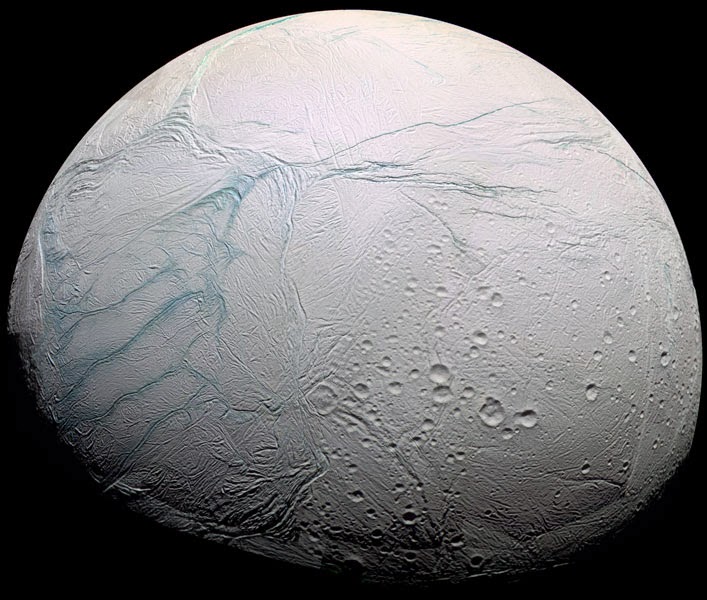
Warm Oceans on Saturn’s Moon Enceladus Could Harbour Life.....

The Cassini mission that has investigated Saturn since 2004 has revealed much about the giant planet and its many moons. Perhaps most tantalizing is the discovery that the moon Enceladus is the source of strong geysers ejecting plumes of water and ice.

A new study of Cassini data published in Nature by Hsiang-Wen Hsu and colleagues reveals these plumes are laced with grains of sand. This indicates that hydrothermal activity may be at work in Enceladus’ sub-surface ocean, and propels this tiny moon into the extremely exclusive club of locations that could harbor life.

The club’s only current member is Earth, of course – although it’s very possible that Europa, one of Jupiter’s moons, is, like Enceladus, also a candidate. What they have in common is that they host liquid oceans of salty water that exists in contact with a rocky, silicate seabed from which the oceans can absorb complex minerals and elements.

Geyser Activity

With a diameter of just 310 miles Enceladus is nevertheless the sixth largest of Saturn’s more than 60 moons, orbiting at a distance of just two planet-widths. Cassini has shown that Enceladus is the source of huge geysers of neutral water-rich gas and ice grains erupting at a rate of 220-660 lbs per second. This makes Enceladus the second most active object, after Jupiter’s moon Io which ejects 2200 lbs per second of sulphur-rich material.

Gravity measurements have shown that there is at least a local and possibly a global ocean under Enceladus’ icy crust, and some of the emitted grains are rich in sodium salt, which indicates the presence of a salty ocean. Now we also discover that some are silicate-rich, and analysis shows that these may have been produced close to hydrothermal vents at temperatures above 194°F. This raises the interesting comparison with hydrothermal vents on Earth, which may have played a role in the origin of life on our planet.

Recipe for Life

For life as we know it to exist, four key ingredients are important: liquid water; the right chemistry involving the elements carbon, hydrogen, nitrogen, oxygen, phosphorus and sulphur; a source of heat; and enough time for life to develop. While we know these conditions exist on Earth, planetary research throughout the solar system shows that it may exist on other objects too, and the details from this paper pushes Enceladus towards the top of the list.

Cassini flyby shows Enceladus venting.

We know liquid water oceans exist on several objects in our solar system. These include Earth with its surface oceans, and Jupiter’s moons Europa, Ganymede and Callisto, and Saturn’s moons Titan and Enceladus where the oceans are below the surface. Water has also played a vital role in Mars’ history: Geronimo Villanueva and colleagues recently showed that there may have been enough water on Mars to cover the planet in an ocean 137 meters deep around 3.8 billion years ago – about the time when life was starting on Earth.

There may also be water on the dwarf planets Ceres and Pluto, Neptune’s moon Triton, and several other objects in the solar system – but only further investigation will tell. Two other objects have lakes and oceans, but not of water. Titan has lakes of methane and ethane, for example – the only extraterrestrial object we know of with liquid on the surface – and volcanic Io has a subsurface ocean of liquid magma.

A Shortlist for Extraterrestrial Life

So where are the best places to look for life in our solar system? The short list now seems to be Mars, Europa and Enceladus. At Mars the most likely time for life to have existed is 3.8 billion years ago when water was present, so the ESA-Russia ExoMars rover due for launch in 2018 will focus on drilling six feet below the present surface’s harsh oxidizing and radiation-rich environment to search for buried evidence from the past. It carries our PanCam instrument which will provide context for the mission.

As for right now, Mars may be a less good candidate for life. Following a catastrophic collision about 3.8 billion years ago the planet underwent massive climate change, volcanic activity stopped, and the planet’s magnetic field disappeared. But the recent confirmation by Curiosity of the presence of methane is tantalizing. At Europa, ESA’s JUICE mission and the proposed NASA Europa Clipper may bring more clues in the 2030s, but further missions to Enceladus have yet to make it past the proposal stage.

Nevertheless, this leaves Europa and Enceladus as prime sites where conditions may be suitable for life to exist now – but who knows which other solar system objects could be the next to join the club.

Tuesday, 24 March 2015

Can Monkeys Get Depressed.....?

According to a new study from Chinese neuroscientists Fan Xu and colleagues, some monkeys can experience depression in a similar way to humans.

The researchers studied cynomolgus monkeys, also known as crab-eating macaques (Macaca fascicularis), a species native to Southeast Asia. Cynomolgus monkeys are highly social animals. Xu et al. previously showed that isolating a monkey from its companions caused it to develop depression-like behaviors. In their new paper, the authors say that they’ve noticed that some monkeys seem to become depressed naturally, without any human intervention.
They observed the monkeys in a large primate breeding facility in Suzhou, China:
From April to November 2010, by means of a scanning method on a total population of 1007 adult female cynomolgus monkeys across all 52 enclosures, we identified subjects displaying depressive behavior using the following operational definition: slumped or collapsed body posture, diminished interest in feeding and sex, and diminished communication and reciprocal grooming with others. In total, 50 subjects met these criteria.
Here’s Xu et al.’s illustration of the slouched posture of two “depressed” monkeys as compared to a happy one:
Some of the descriptions of the behavior of the pessimistic primates are rather poignant:
NOD subjects more often selected safer and more remote places to feed (i.e., ‘feeding while hanging’) to avoid confrontation. Second, in terms of resting behaviors, NOD subjects selected safer and more remote areas to rest… NOD subjects spent more time on solitary huddling or embracing a conspecific (i.e., ‘huddling’ / ‘embracing’).
Xu et al. argue that the melancholy macaques represent a close analog of human depression because
Similar to many modern human societies, scarce resources that form the basis of stress-inducing social competition (e.g., food, sex) are unevenly distributed among different social classes…  our model involves chronic mild psychosocial stressors that are randomly distributed throughout daily social life that accumulate over time.
Hmm. The analogy between modern society and a monkey enclosure does have a certain face validity. But who are we to say whether these monkeys are suffering from “depression” (pathological) as opposed to “sadness” (normal emotional response)? This is a notoriously difficult distinction to draw in humans, let alone in monkeys! While these animals certainly appear to be miserable, maybe they are just a model for human misery, not human mental illness.

Journey North: Tracking the Stories of Survival with Citizen Science....

This is how the story is told.....
It was a crisp morning following a cold night in Goleta’s Coronado Monarch Butterfly Preserve. As Luke crossed a beam that had been dropped across a swampy area, he looked up at the Eucalyptus grove and sighed quietly. “Where are the butterflies Dad,” he asked me - with one part expectation and one part disappointment.

“They’re meant to be roosting up there in the leafy branches,” I motioned before adding, “hopefully.”

But we didn’t immediately see any monarchs in the trees - instead we noticed a few on the ground, here and there. Our eyes became accustomed to the early morning gloom, and we realized an inordinate number of brightly coloured insects were scattered on the ground throughout the grove. As we walked and photographed them, stepping carefully, I realized why so many were to be found there - with a windy night, many had blown off their perch; and with it also being a cold night, they had not been able to stretch their wings and fly. They were waiting for the caress of the first rays to erase the stiffness from their limbs.

About two hours later, when the grove was bathed in a strong warm light, swarm after swarm began to burst into flight, not unlike the sudden release of a thousand balloons filled with helium. “Now I get it,” said Luke. This was what we had come to see - generations of golden-winged insects in a grove of grey-leafed trees - returned to where a generational lifecycle had begun.

This migration was what inspired Elizabeth Howard to found Journey North in 1994. Her interest piqued by the early Internet-based projects in which school children tracked human expeditions, for example across the Arctic by dogsled, or Africa by bicycle, Howard saw what she describes as “a clear and exciting parallel between these expeditions, and the wildlife migrations that cross the globe with the seasons.” Both were for her, the ultimate survival stories. “The same challenges encountered on a remote expedition - changing weather, lack of food, insufficient time - have always challenged migratory species as they travel across the globe or pass through our own backyards.”

Journey North tallies the first-of-year sightings of hummingbirds, robins, monarchs, blooming tulips and gray whales, amongst others. This month, the Gray Whales Count  recorded 40 northbound whales on March 7 alone for a total of 266 so far, compared to 153 on for March 7, 2014. “We do not expect these numbers until maybe the fourth week in March,” says Michael Smith, the director of Gray Whales Count. “I don’t know if it is population increase, great weather and observation ability, and/or whales deciding to use this route more than in the past. It’s fun to speculate.”

Journey North offers an easy entry point to citizen science. They focus on high interest topics, a simple protocol, and real-world applications, which results in a large network of participants who are currently based at more than 50,000 sites across North America.

They have two goals - scientific research and education, and the data is used as follows:
Scientific – to document how migratory species respond to climate and the changing seasons. The long-term data set allows for valuable year-to-year comparisons, while  also providing for real-time analysis. This is particularly useful for the question-generating step of scientific inquiry. With observers spread across a large range, unusual and remarkable observations are made that raise valuable questions.

Education And Outreach -
equally important is the educational and outreach components of the project. Journey North began as a school-based initiative, but over time, as citizen science and technology grew in importance, participation spilled over to the general public. Participation is now only 30 percent school based and 70 percent non-school.

Elizabeth Howard says, “As part of our outreach effort, we produce weekly news for each featured species. The news is based on the data that citizen scientists’ contribute, as well as the descriptions and images they provide from the field. We incorporate comparative maps, graphs, and scientific analysis.” For educators, Journey North provides a rich array of resources, images, video clips, articles, activities, and lesson plans all of which enable teachers to build interdisciplinary studies into the curriculum.

Journey North has published nine papers based on the monarch butterfly, and one on the ruby-throated hummingbird. “For monarch butterflies, our findings have revealed fall migration pathways to Mexico, the rate of spring re-colonization into the breeding grounds, and the variable presence of monarchs wintering in the U.S. Gulf coast states, for example,” adds Howard.

“We also regularly provide data to scientists, resources managers, and conservation planners who need information about the spatial temporal dynamics of a species distribution.” This online effort today supports the program and lends Journey North the authority and authenticity that educators value.